Quick! What's the housing of your computer screen made out of? What about the dash of your car?
If you struggled for a moment, I wouldn't be surprised. The first question is ripped directly from the pages of an interesting book I'm reading by Geoff Nunberg of NPR fame called, Going Nucular[sic]. I'm still at the beginning but it's proving very enlightening. Nunberg, a linguist who specializes (according to Wikipedia) in lexical semantics, writes about the various ways our word-choice has transformed over the years- shaped by our environment and culture. I bought his book on a lark, literally picking up the first paperback with an interesting title because I had to break a hundred.
At the very beginning, he hits upon something anyone with an interest in synthetics has considered, however obliquely. He talks about how the word "plastic" shifted from something that indicated status and modernity to a word that has fallen out of vogue, a word that indicates superficiality, the cheap, the disposable, and waste. However, chances are, most everything in your modern life has some quantity of plastic in it. Even something like a spiral bound notebook, a very basic invention, might have a thin layer of plastic on the cardbard cover. Pens, which used to merit the actual business of "pen repair" are now throwaway plastic tubes. Even in more expensive pens that use refill cartridges, those cartridges will have some quantity of plastic.
Of course, not all plastic is created equal. In the AMC hit show, Breaking Bad, where the main character is a chemist who is forced by his cancer and financial situation to make and sell crystal meth, this is illustrated when they want to dispose of a body by dissolving it in acid. This scene will be with me for the rest of my life simply because it was so satisfying for me to watch. He specifically requests his partner (a non-chemist) get a large plastic tub with a resin identification code that labeled it as LDPE. These are the little "recyclable" icons with a number inside that you see on plastic products.
Plastics are made up of long chains of molecules called polymers. This gives plastic its characteristic flexibility. In the case of LDPE, the plastic is fairly non-reactive with concentrated acids. (Though if you throw an organic solvent on it, it will practically "thaw" before your eyes). His partner, repulsed by the thought of having to cut the body up to fit into the two containers, decides to use the bathtub. The bathtub is made of conventional ceramic (basically clay that has taken on a structure similar to glass) and is attacked by the strong hydroflouric acid solution and we get a (literal) bloody mess when the partially decomposed body pours through the floor into the hallway below. Hydrofluoric acid, I might add, is extremely dangerous. Most simple, strong acids will merely burn you. HF is absorbed through the skin very easily and acts as a poison since the fluorine binds strongly to the calcium ions in the bloodstream. These ions are critical to the function of our nervous system and muscles. It's essentially a rudimentary neurotoxin (though some neuroscientists may prefer to use the term more restrictively).
It's the characteristic nonreactive nature of plastic that makes it so useful, and so harmful to the environment. While recent studies have shown that plastic can in the right conditions, degrade naturally, the vast majority of plastic waste will continue to pose an environmental hazard indefinitely. Plastic breaks down mechanically over time, mixing with soil and entering the food chain. This is how plastic got to be such a dirty word. Plastic was the material of the future for a while. Disney had an exhibition called "House of the Future" where the entire structure was made of plastic. Legend has it that the wrecking ball essentially bounced off of it when the time came to tear it down. With increasing environmental consciousness (and presumably, hippies) the plastic craze died down.
Despite the fact that plastic can be recycled (the resin codes I mentioned earlier were designed to facilitate recycling) it's an energy intensive process- one that inevitably leads to more emissions. This is why the mantra of the environmentally conscious is, "Reduce. Reuse. Period." Some attempts are being made at creating plastics that do chemically degrade. The only problem with this is that one of the things that makes plastic so useful is the fact that it doesn't break down easily over time. Still this may prove useful for such things as single-serving beverage bottles, disposable cups, straws, etc.
Alas, modern life is simply not possible without plastic. Remember the computer and your car's dash. Laptops are affordable and portable because they are made of plastic. They're also more resilient and tolerant of drops and shocks than they would be otherwise. Similarly, in an accident, if your airbags fail, you don't want to slam your face into a wood, steel, or aluminum surface. Also, imagine the money you save on gas driving a car not entirely made of metal and wood.
I'm not saying that it is entirely impossible or futile to eliminate synthetic plastics from our world, but it does no good to be in denial of the challenges that face scientifically-sound environmentalism. There needs to be acknowledgment on some level that plastic isn't going anywhere. We should be reducing and reusing as much as possible until a more permanent solution is found. A metal canister/cans for drinks, paper cups, and less packaging are all steps that can be taken to reduce the amount of plastic that ends up in the ecosystem. Energy-efficient systems and infrastructure for plastic recycling and disposal are going to have to be critical areas of development in the future.

Showing posts with label Chemistry. Show all posts
Showing posts with label Chemistry. Show all posts
Wednesday, February 3, 2010

Tuesday, April 14, 2009
The Shape of Things To Come
I was working in the library the other day when I found this crawling up my jacket:
 Hey little guy!
Fortunately I happened to have a half decent camera to take a picture of this inchworm, which is really a kind of caterpillar. I naturally went outside and released it into a bush to munch on some leaves. I admit it, I'm a buggist. If it had been a cockroach crawling up my jacket I probably would have gotten all eeky, smashy, stompy, killy; but I find inchworms, and especially the way they move, kind of endearing.
The scientific name of the family to which the inchworm belongs, and the moth it eventually turns into, is "Geometridae". It comes from Greek, meaning earth-measure. So does the word "geometry". It seems like a peculiar way to segue into a topic on chemistry, but chemistry is called the "central science" for a reason. This is a post on geometry, and how chemistry isn't just about the elements.
As you probably know, unless you live in a box or suffer from severe urbanitis, when caterpillars turn into moths or butterflies, they have to construct a cocoon. Cocoons have been used by humans for thousands of years, primarily to make silk and stay young. While I haven't heard of anyone making clothing from the silk of an inchworm, silks all serve the same function aside from being pretty: They protect the developing insect. Insect silk isn't as renowned for it's strength as that of their arthropod cousins, the arachnids; specifically spiders. However it's the same principles give both kinds of silk such high tensile strengths. The secret lies in their geometry.
When I had an argument recently with someone about vaccination, I mentioned that geometry is a major factor in how chemistry works. People who haven't gone beyond a sophomore organic chemistry class know what I'm talking about. It's often not enough for certain elements to be present in a compound to start guessing its properties, and this is especially true in biological systems. It's how these elements are arranged that can make all the difference. I cannot overemphasize how important this concept is. There are more than a few rules that organic chemists have generated over the years simply to describe geometries. They have arguments over structures, and expend considerable effort resolving the exact structure of a molecule. Over at the Curious Wavefunction there are posts on peer-reviewed research discussing the structure of hexacyclinol, if you want some idea of what that looks like.
In silks, spider and insect, the high tensile strength is primarily due to what are known as β- pleated sheets of proteins linked together. Proteins are huge molecules. We call them macro-molecules, containing potentially thousands of atoms. Beta-pleated sheets, as the name implies are arranged like the pleat of a skirt. This arrangment offers crystalline strength. The protein "threads" that link the sheets together are also responsible for strength. The precise way that these geometries interact to make silk so strong is something still not completely understood. A lot of work goes into the process of first discovering the precise arrangements of atoms in the large molecules that comprise silk, and then discovering how this arrangement translates into strength.
The proteins that make up these silks are on the elemental level: nitrogen, oxygen, hydrogen, and carbon (basically). Yet those very things could also be in a racing fuel. To start giving credit to these elements for the strength of silk based on their elemental forms would be ludicrous. It has a lot more to do with the how of elements bonding than the what.
Sometimes what may sound like minor variations in a chemical's structure actually amount to quite a lot. The best example of this is enantiomers. Look at the picture below:
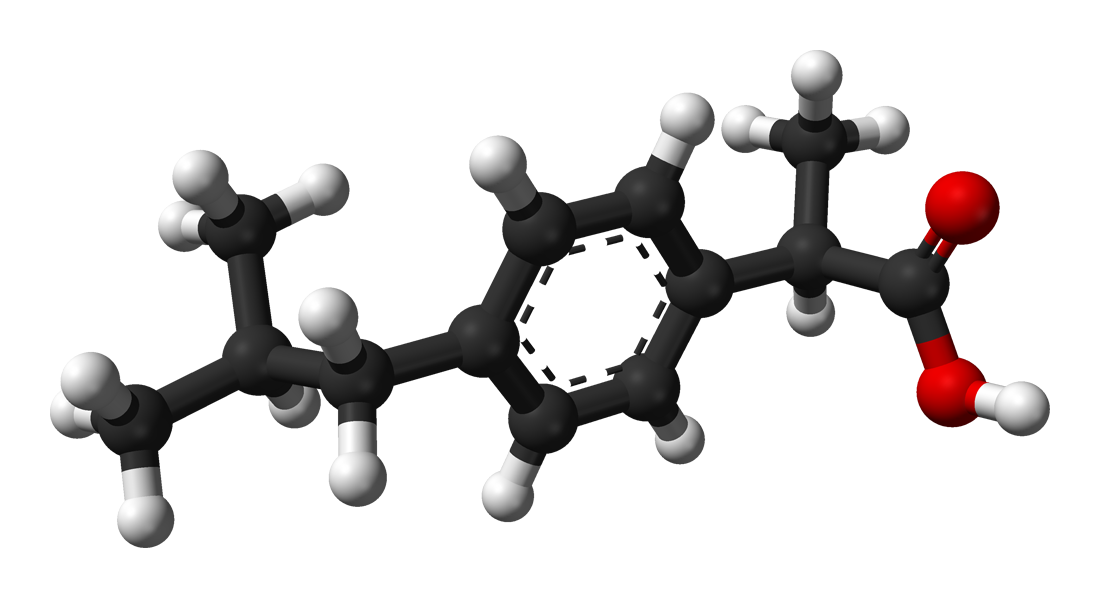
Ladies and gentlemen, meet ibuprofen, perhaps better known to you as Advil or Motrin. It is your best friend when you have a headache. Or is it? Actually that is a picture of (R)-ibuprofen, the right handed form of the molecule. What you want is actually this guy:
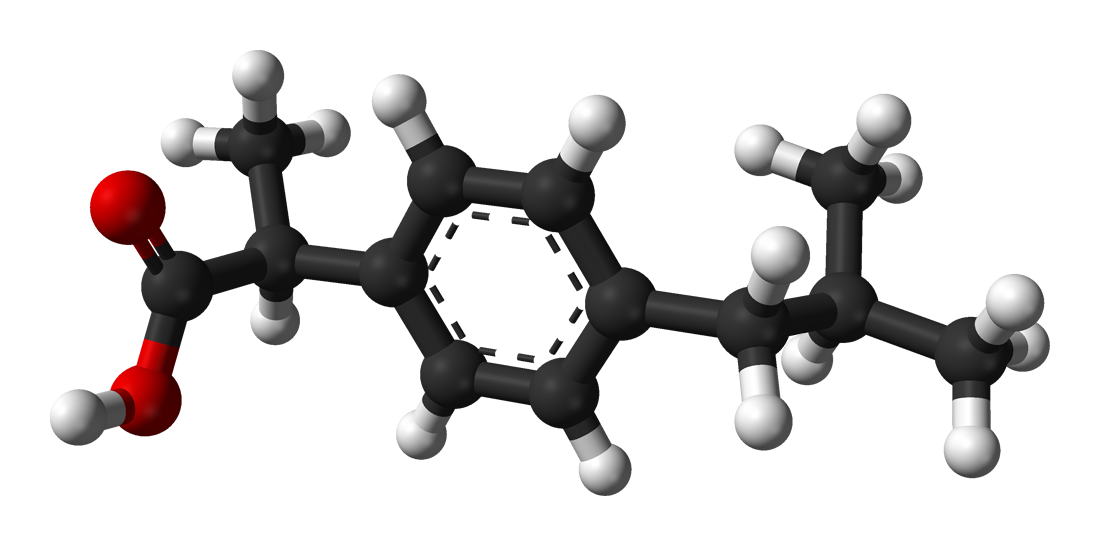 They are literally mirror images of each other. However, only one really cures your headache fast. The (S)-ibuprofen (left-handed form) is the one that acts quickly to cure your headache. The right-handed form kind of screws around in your body a bit before actually turning into the left-handed form. You may not see how they are mirror images, but it becomes clear when you construct a model of them and hold them side by side. These molecules are chiral, the word "chiral" coming from the Greek word for "hand". Your hands are chiral objects. When you hold your hands in front of you, they are mirror images of each other, but if you set one hand on top of the other, the thumbs are at opposite ends. They are in effect, non-superimposable mirror images of each other. We call these enantiomers of each other. They have the exact same boiling point and melting point, but in your body, which is a chiral environment, they have different effects. Chirality is a big deal in biology. In fact, there is some evidence that the right-handed form of ibuprofen may actually slow down the action of the left-handed form. Enantiomers can be expensive and difficult to separate, though. This is why the ibuprofen you buy at the store is actually a mixture of these two forms. For now.
This post started with an inchworm and worked it's way into something much longer than I intended at first. It's just a sneak peek into the world of chemistry, it's my way of showing that it's more complicated than throwing two things together and getting a reaction. It's become my best attempt to date at expressing some of the complexity inherent in chemistry in layman's terms. I think it's important people understand that chemistry goes beyond the periodic table, and has depths that they may not be familiar with. I only hope it's been written clearly enough.
 Hey little guy!
Fortunately I happened to have a half decent camera to take a picture of this inchworm, which is really a kind of caterpillar. I naturally went outside and released it into a bush to munch on some leaves. I admit it, I'm a buggist. If it had been a cockroach crawling up my jacket I probably would have gotten all eeky, smashy, stompy, killy; but I find inchworms, and especially the way they move, kind of endearing.
The scientific name of the family to which the inchworm belongs, and the moth it eventually turns into, is "Geometridae". It comes from Greek, meaning earth-measure. So does the word "geometry". It seems like a peculiar way to segue into a topic on chemistry, but chemistry is called the "central science" for a reason. This is a post on geometry, and how chemistry isn't just about the elements.
As you probably know, unless you live in a box or suffer from severe urbanitis, when caterpillars turn into moths or butterflies, they have to construct a cocoon. Cocoons have been used by humans for thousands of years, primarily to make silk and stay young. While I haven't heard of anyone making clothing from the silk of an inchworm, silks all serve the same function aside from being pretty: They protect the developing insect. Insect silk isn't as renowned for it's strength as that of their arthropod cousins, the arachnids; specifically spiders. However it's the same principles give both kinds of silk such high tensile strengths. The secret lies in their geometry.
When I had an argument recently with someone about vaccination, I mentioned that geometry is a major factor in how chemistry works. People who haven't gone beyond a sophomore organic chemistry class know what I'm talking about. It's often not enough for certain elements to be present in a compound to start guessing its properties, and this is especially true in biological systems. It's how these elements are arranged that can make all the difference. I cannot overemphasize how important this concept is. There are more than a few rules that organic chemists have generated over the years simply to describe geometries. They have arguments over structures, and expend considerable effort resolving the exact structure of a molecule. Over at the Curious Wavefunction there are posts on peer-reviewed research discussing the structure of hexacyclinol, if you want some idea of what that looks like.
In silks, spider and insect, the high tensile strength is primarily due to what are known as β- pleated sheets of proteins linked together. Proteins are huge molecules. We call them macro-molecules, containing potentially thousands of atoms. Beta-pleated sheets, as the name implies are arranged like the pleat of a skirt. This arrangment offers crystalline strength. The protein "threads" that link the sheets together are also responsible for strength. The precise way that these geometries interact to make silk so strong is something still not completely understood. A lot of work goes into the process of first discovering the precise arrangements of atoms in the large molecules that comprise silk, and then discovering how this arrangement translates into strength.
The proteins that make up these silks are on the elemental level: nitrogen, oxygen, hydrogen, and carbon (basically). Yet those very things could also be in a racing fuel. To start giving credit to these elements for the strength of silk based on their elemental forms would be ludicrous. It has a lot more to do with the how of elements bonding than the what.
Sometimes what may sound like minor variations in a chemical's structure actually amount to quite a lot. The best example of this is enantiomers. Look at the picture below:
Ladies and gentlemen, meet ibuprofen, perhaps better known to you as Advil or Motrin. It is your best friend when you have a headache. Or is it? Actually that is a picture of (R)-ibuprofen, the right handed form of the molecule. What you want is actually this guy:
They are literally mirror images of each other. However, only one really cures your headache fast. The (S)-ibuprofen (left-handed form) is the one that acts quickly to cure your headache. The right-handed form kind of screws around in your body a bit before actually turning into the left-handed form. You may not see how they are mirror images, but it becomes clear when you construct a model of them and hold them side by side. These molecules are chiral, the word "chiral" coming from the Greek word for "hand". Your hands are chiral objects. When you hold your hands in front of you, they are mirror images of each other, but if you set one hand on top of the other, the thumbs are at opposite ends. They are in effect, non-superimposable mirror images of each other. We call these enantiomers of each other. They have the exact same boiling point and melting point, but in your body, which is a chiral environment, they have different effects. Chirality is a big deal in biology. In fact, there is some evidence that the right-handed form of ibuprofen may actually slow down the action of the left-handed form. Enantiomers can be expensive and difficult to separate, though. This is why the ibuprofen you buy at the store is actually a mixture of these two forms. For now.This post started with an inchworm and worked it's way into something much longer than I intended at first. It's just a sneak peek into the world of chemistry, it's my way of showing that it's more complicated than throwing two things together and getting a reaction. It's become my best attempt to date at expressing some of the complexity inherent in chemistry in layman's terms. I think it's important people understand that chemistry goes beyond the periodic table, and has depths that they may not be familiar with. I only hope it's been written clearly enough.
Wednesday, September 10, 2008
Chemistry Myth: Glass Is A Liquid
I've heard it before, and I keep coming across this idea: That glass is a liquid, it's just exceedingly slow-moving/viscous/lazy and unwilling to get off the couch. I don't blame people for believing it, I myself did for a long time. My science teacher told me this myth and I passed it on. It's just that there's something about glass, we take it for granted but whenever we actually start thinking about it, glass does seem like an amazing substance doesn't it? Granted it doesn't seem so amazing when you try walking straight into a glass door. So it seems credible that this incredibly smooth and ice-like substance might be some kind of exception to the rules of chemistry. Well I don't mean to shatter the mystery, but I promise to replace it with a much more interesting truth.
Glass, as you might already know is made from a mineral, silicon dioxide, which is the principal component of white sand. We heat the sand up, blow it into interesting shapes, and toss it into water to quench, or cool it rapidly (this is the key, as you will see in a minute.)
To explain glass, I need to explain the nature of liquid to solid transition. To do this, I'm going to show you a standard cooling curve for a container of water:
 This curve looks similar for many substances, though some substances sublime under normal conditions, which means they turn directly from solid to gas and back. The reason I chose water here is because water is something we are all familiar with, and because I hope to get people to try experimenting at home. We all know water freezes at zero, but it won't go any lower until all of the water has turned to ice in a solution (we think of a mixture of water and ice as a solution in this example, even though they are the same compound.) However, you will notice a little dip in the curve that goes below zero, even though the water is still a liquid. This is liquid that is colder than the compound's melting point. A supercool liquid. How is this possible?
The answer lies in the simple fact that solids are solids because their molecules take on a rigid structure. Look at this rough representation of water sliding around in liquid form:
 Now this diagram is somewhat problematic in many ways, but it will do for this explanation. Here we see our old friend the Mickey Mouse model of water. Now the reason hydrogen bonds to oxygen is that oxygen likes to donate an electron to hydrogen, and oxygen is more than happy to give one electron to each of two hydrogen (since hydrogen only has one positive charged proton to cancel out). This is how molecules try to equalize their charges. In nature, electromagnetic charges do their best to cancel each other out. However, oxygen is always hungry, it's so much more massive that hydrogen (about sixteen times as massive) and it has a slight negative charge even when its fully bonded to hydrogen. Hydrogen too, retains a slight positive charge.
Now in liquid water under normal conditions, these slight charges hold the water molecules together enough that most don't zing off into the air (cohesion). Though if you leave it lying around long enough it will evaporate, the water is warm enough that the molecules are bouncing around rather happily and don't stick in any rigid formation.
Now if you cool the water down slowly enough (and you may have had this experience with water, but it is common in alcoholic beverages.) the molecules will slow down very gradually, but they won't fall into any kind of order. They won't slide across each other as much, but they will kind of almost stand still in one place. This is the supercool liquid, there is no real structure to the molecules, they're not arranged in a way that would look like a solid. However, if you take this slowly cooled liquid (and once again, I encourage you to try this at home) and agitate it, it will freeze up and turn into ice almost instantaneously. This is because you have physically forced the molecules to turn, and they freeze up in an arranged structure, usually according to their partial charges, which looks a little like this:
 As you can see, the slightly positively charged hydrogen ions are attracted to the slightly negatively charged oxygen ions. This is what a classic crystalline structure looks like.
"But Chemist," You ask, "What does this have to do with glass?"
Well, I'm glad you asked. Glass is like any other liquid when melted. As a mentioned before, it's silicon dioxide, which you may be familiar with in the form of sand, but also quartz. Yet you can't really see through most quartz crystals that well, they tend to let light in one way but not another. Glass doesn't have this problem. This is because unlike the ice in your refrigerator, when we freeze glass (that's the term we use for cooling anything into a solid) it's in an amorphous state, not crystalline. This means it's in that same disordered state I showed you when water is still liquid. This allows light to pass through it in all directions with minimal interference.
How do we get that to happen? It's the quenching process that I said was key earlier. While the glass is still in its plastic state having been melted, we rapidly cool it. This means that we get the temperature down low enough while its still a supercool liquid (which for glass is actually kind of hot) that it freezes instantaneously without rearranging its molecular structure much. Hence glass is not a liquid, it's a solid, albeit an amorphous solid. Its not super viscous, viscosity is a measure of how much molecules are attracted to each other in a liquid, the molecules in glass are locked in place, but they have no particular order.
The exact same thing can happen with water. Cool water rapidly enough and it will turn into amorphous ice, and will have similar glassy properties. However I don't recommend you try cooling water this rapidly at home. My guess is you would need a dangerously cold substance to cool water this rapidly, and I don't want anyone getting frostbite or worse. If you think you can pull it off with household materials you can try it (you might want to work with tiny amounts of water) just don't break out the liquid nitrogen, mmkay?
There you have it, a chemistry myth discredited. Questions? Comments?
Glass, as you might already know is made from a mineral, silicon dioxide, which is the principal component of white sand. We heat the sand up, blow it into interesting shapes, and toss it into water to quench, or cool it rapidly (this is the key, as you will see in a minute.)
To explain glass, I need to explain the nature of liquid to solid transition. To do this, I'm going to show you a standard cooling curve for a container of water:
 This curve looks similar for many substances, though some substances sublime under normal conditions, which means they turn directly from solid to gas and back. The reason I chose water here is because water is something we are all familiar with, and because I hope to get people to try experimenting at home. We all know water freezes at zero, but it won't go any lower until all of the water has turned to ice in a solution (we think of a mixture of water and ice as a solution in this example, even though they are the same compound.) However, you will notice a little dip in the curve that goes below zero, even though the water is still a liquid. This is liquid that is colder than the compound's melting point. A supercool liquid. How is this possible?
The answer lies in the simple fact that solids are solids because their molecules take on a rigid structure. Look at this rough representation of water sliding around in liquid form:
 Now this diagram is somewhat problematic in many ways, but it will do for this explanation. Here we see our old friend the Mickey Mouse model of water. Now the reason hydrogen bonds to oxygen is that oxygen likes to donate an electron to hydrogen, and oxygen is more than happy to give one electron to each of two hydrogen (since hydrogen only has one positive charged proton to cancel out). This is how molecules try to equalize their charges. In nature, electromagnetic charges do their best to cancel each other out. However, oxygen is always hungry, it's so much more massive that hydrogen (about sixteen times as massive) and it has a slight negative charge even when its fully bonded to hydrogen. Hydrogen too, retains a slight positive charge.
Now in liquid water under normal conditions, these slight charges hold the water molecules together enough that most don't zing off into the air (cohesion). Though if you leave it lying around long enough it will evaporate, the water is warm enough that the molecules are bouncing around rather happily and don't stick in any rigid formation.
Now if you cool the water down slowly enough (and you may have had this experience with water, but it is common in alcoholic beverages.) the molecules will slow down very gradually, but they won't fall into any kind of order. They won't slide across each other as much, but they will kind of almost stand still in one place. This is the supercool liquid, there is no real structure to the molecules, they're not arranged in a way that would look like a solid. However, if you take this slowly cooled liquid (and once again, I encourage you to try this at home) and agitate it, it will freeze up and turn into ice almost instantaneously. This is because you have physically forced the molecules to turn, and they freeze up in an arranged structure, usually according to their partial charges, which looks a little like this:
 As you can see, the slightly positively charged hydrogen ions are attracted to the slightly negatively charged oxygen ions. This is what a classic crystalline structure looks like.
"But Chemist," You ask, "What does this have to do with glass?"
Well, I'm glad you asked. Glass is like any other liquid when melted. As a mentioned before, it's silicon dioxide, which you may be familiar with in the form of sand, but also quartz. Yet you can't really see through most quartz crystals that well, they tend to let light in one way but not another. Glass doesn't have this problem. This is because unlike the ice in your refrigerator, when we freeze glass (that's the term we use for cooling anything into a solid) it's in an amorphous state, not crystalline. This means it's in that same disordered state I showed you when water is still liquid. This allows light to pass through it in all directions with minimal interference.
How do we get that to happen? It's the quenching process that I said was key earlier. While the glass is still in its plastic state having been melted, we rapidly cool it. This means that we get the temperature down low enough while its still a supercool liquid (which for glass is actually kind of hot) that it freezes instantaneously without rearranging its molecular structure much. Hence glass is not a liquid, it's a solid, albeit an amorphous solid. Its not super viscous, viscosity is a measure of how much molecules are attracted to each other in a liquid, the molecules in glass are locked in place, but they have no particular order.
The exact same thing can happen with water. Cool water rapidly enough and it will turn into amorphous ice, and will have similar glassy properties. However I don't recommend you try cooling water this rapidly at home. My guess is you would need a dangerously cold substance to cool water this rapidly, and I don't want anyone getting frostbite or worse. If you think you can pull it off with household materials you can try it (you might want to work with tiny amounts of water) just don't break out the liquid nitrogen, mmkay?
There you have it, a chemistry myth discredited. Questions? Comments?
Tuesday, September 9, 2008
Glenn T. Seaborg: Teacher
Reading Glenn Seaborg's book, Adventure in the Atomic Age: From Watts to Washington, one is immediately captivated by the genial tone, the humble perspective, and the nuance of the writer. When I picked up the book I knew nothing about Seaborg, save a little of his work in nuclear chemistry, but when I set it down I could not help but feel I knew Glenn T. Seaborg on a much more personal level.
The autobiography starts with his beginnings as the child of immigrant parents from Sweden. He was born and spent the first part of his life in Ishpeming, Michigan. It is interesting to read about such things as the time the newly minted Green Bay Packers came to town. They would play the Ishpeming team, only to lose 33-0. His father was a skilled machinist, and he writes of the trouble he had finding employment and how the Great Depression affected his family. Foreshadowing later chapters, he informs us of how the Great Depression convinced him that government could be a force to help people.
One learns of how Seaborg would earn money for college, and his love of physical exercise as a cure-all. He attended the University of California Los Angelos shortly after it was founded, and testifies in the book to the ability of public universities to level the playing field by providing students like him with opportunities he would not have had otherwise.
He talks about walking into the President's office to ask for a graduate program to be instituted. Even today it would be unheard of for an undergraduate student to get a chance to talk to the people who ran the university. He would later find himself under the tutelage of one G.N. Lewis. Yes, that G.N. Lewis, the one that created the Lewis dot-diagram. He mentions how Lewis should have won the Nobel Prize, and likely would have if he had not alienated so many scientists with his take-no-prisoners attitude during colloquium.
It is interesting to note that he so often describes people in favorable terms whenever he found occasion to do so. He talks as fondly of the presidents during his tenure as AEC chairman, as they gave him cause to. He is the only person I have ever heard of to punch Reagan in the stomach and get away with it (though you'll have to read the book for that little story). Yet with all of the deserved praise he heaps on others, and even the acknowledgment of his own achievements, he remains rather modest. He talks about rubbing shoulders and butting heads with politicians as though these things were ordeals that he struggled with, yet we see from the results he achieved that he was an adept politician and diplomat himself.
He learned a great deal from watching people do their jobs successfully, and put these lessons to use in his own life. It is an inspirational work for it teaches you about the importance of working with people rather than against them. Even after other scientists shunned Edward Teller for his damaging testimony against J. Robert Oppenheimer during the Red Scare, Seaborg did not. Despite the fact that Seaborg recognized the manner in which Teller's vociferous anti-communism poisoned his thinking, he would do his best to work with him. Indeed, consensus building was his strong suit. While working for the AEC, even when he had the majority of commissioners on his side, he would work with the minority and negotiate until they could issue a unanimous opinion.
In the book, which was published in 2001, three years after his death in February in 1999, he takes on the role of prophet. He emphasizes the damaging effects of our dependence on fossil fuels, environmentally, politically, and pragmatically. He argues for the advent of safe and clean nuclear power with the frustrated patience of someone who knows he's being reasonable, if only people would listen. It is one thing to read a book where the author holds opinions similar to your own and to walk away agreeing with him or her. While not diametrically opposed to what Seaborg believed in, I did walk away with some of my misconceptions changed. While I've always been for nuclear power, my understanding of the risks involved with nuclear power was somewhat mistaken as I see now. I also understand the importance of a level of civility in public discourse, where before reading the book I had some very different ideas about it.
Seaborg was a true scientist, doing his best to make sure he remained productive after winning the Nobel Prize for his discovery of plutonium with Edwin McMillan (though Enrico Fermi and his team* was given premature credit for the discovery.) In many respects his creation of new elements made Seaborg into a 20th century alchemist, capable of transmuting one element into another. Yet when he was asked to head the AEC, he felt a duty to accept the position, so he did, and so it was for every position he held as something other than a scientist doing basic research.
Yet, he was also a teacher, and you get the sense that it was just as important to him as anything else. He wrote about sitting down to do all of the problems in the General Chemistry textbook before teaching the class after an extended period away from the academic world. When his secretary peeked in on him, his only comment was on how hard the questions were. This is made me smile. A lot of the book made me smile, and the last part of Glenn Seaborg's own writing, before it gives way to his son's epilogue, was A Letter To A Young Scientist. Being the person to whom the letter was addressed, I closed the book and waited until I could find more peaceful surroundings. When I finally got a chance to read it in peace, I appreciated the letter. It appropriately addressed my own specific fears and concerns, allaying them and encouraging me, and for that I am grateful.
*Added in light of a comment to this post.
The autobiography starts with his beginnings as the child of immigrant parents from Sweden. He was born and spent the first part of his life in Ishpeming, Michigan. It is interesting to read about such things as the time the newly minted Green Bay Packers came to town. They would play the Ishpeming team, only to lose 33-0. His father was a skilled machinist, and he writes of the trouble he had finding employment and how the Great Depression affected his family. Foreshadowing later chapters, he informs us of how the Great Depression convinced him that government could be a force to help people.
One learns of how Seaborg would earn money for college, and his love of physical exercise as a cure-all. He attended the University of California Los Angelos shortly after it was founded, and testifies in the book to the ability of public universities to level the playing field by providing students like him with opportunities he would not have had otherwise.
He talks about walking into the President's office to ask for a graduate program to be instituted. Even today it would be unheard of for an undergraduate student to get a chance to talk to the people who ran the university. He would later find himself under the tutelage of one G.N. Lewis. Yes, that G.N. Lewis, the one that created the Lewis dot-diagram. He mentions how Lewis should have won the Nobel Prize, and likely would have if he had not alienated so many scientists with his take-no-prisoners attitude during colloquium.
It is interesting to note that he so often describes people in favorable terms whenever he found occasion to do so. He talks as fondly of the presidents during his tenure as AEC chairman, as they gave him cause to. He is the only person I have ever heard of to punch Reagan in the stomach and get away with it (though you'll have to read the book for that little story). Yet with all of the deserved praise he heaps on others, and even the acknowledgment of his own achievements, he remains rather modest. He talks about rubbing shoulders and butting heads with politicians as though these things were ordeals that he struggled with, yet we see from the results he achieved that he was an adept politician and diplomat himself.
He learned a great deal from watching people do their jobs successfully, and put these lessons to use in his own life. It is an inspirational work for it teaches you about the importance of working with people rather than against them. Even after other scientists shunned Edward Teller for his damaging testimony against J. Robert Oppenheimer during the Red Scare, Seaborg did not. Despite the fact that Seaborg recognized the manner in which Teller's vociferous anti-communism poisoned his thinking, he would do his best to work with him. Indeed, consensus building was his strong suit. While working for the AEC, even when he had the majority of commissioners on his side, he would work with the minority and negotiate until they could issue a unanimous opinion.
In the book, which was published in 2001, three years after his death in February in 1999, he takes on the role of prophet. He emphasizes the damaging effects of our dependence on fossil fuels, environmentally, politically, and pragmatically. He argues for the advent of safe and clean nuclear power with the frustrated patience of someone who knows he's being reasonable, if only people would listen. It is one thing to read a book where the author holds opinions similar to your own and to walk away agreeing with him or her. While not diametrically opposed to what Seaborg believed in, I did walk away with some of my misconceptions changed. While I've always been for nuclear power, my understanding of the risks involved with nuclear power was somewhat mistaken as I see now. I also understand the importance of a level of civility in public discourse, where before reading the book I had some very different ideas about it.
Seaborg was a true scientist, doing his best to make sure he remained productive after winning the Nobel Prize for his discovery of plutonium with Edwin McMillan (though Enrico Fermi and his team* was given premature credit for the discovery.) In many respects his creation of new elements made Seaborg into a 20th century alchemist, capable of transmuting one element into another. Yet when he was asked to head the AEC, he felt a duty to accept the position, so he did, and so it was for every position he held as something other than a scientist doing basic research.
Yet, he was also a teacher, and you get the sense that it was just as important to him as anything else. He wrote about sitting down to do all of the problems in the General Chemistry textbook before teaching the class after an extended period away from the academic world. When his secretary peeked in on him, his only comment was on how hard the questions were. This is made me smile. A lot of the book made me smile, and the last part of Glenn Seaborg's own writing, before it gives way to his son's epilogue, was A Letter To A Young Scientist. Being the person to whom the letter was addressed, I closed the book and waited until I could find more peaceful surroundings. When I finally got a chance to read it in peace, I appreciated the letter. It appropriately addressed my own specific fears and concerns, allaying them and encouraging me, and for that I am grateful.
*Added in light of a comment to this post.
Saturday, August 30, 2008
Hydrogen Hoaxing
What else can we expect? Gas prices go up, people need to fill their tanks, a legitimate need arises, and so in come the people to try and fill that need. We see bicycle stores and public transport benefit from a world with higher gas prices. Of course, in such times it is sadly predictable that others would try to make a fast buck off of people's ignorance. This is where a website called Water4Petrol comes in.
Now hydrogen can be used as a fuel and, since it combines with oxygen to form water vapor under normal conditions, an exceptionally clean fuel at that. It's not the idea that hydrogen can be used as a fuel that I find appalling. Right now considerable investment is going into research to find easy and cheap ways to produce hydrogen, and while I'm not optimistic about the prospects so far, I wish them luck.
Now any chemist, scientist, engineer, or well-informed layperson should be able to look at the site and quickly understand why it's a not a plausible method of saving money on gas. So for the benefit of the completely uninitiated, I'll try to keep this on a very basic level. To summarize what the website purports:
1. Water is electrolyzed in what can best be described as a jar, but let's give these people the benefit of a doubt and call it a magic jar. To electrolyze something means to break it up using electricity. In the case of water, this means breaking it up into hydrogen and oxygen. When hydrogen bonds to oxygen to make water, a certain amount of energy is released in forming the bond. When the bond is broken, therefore, it stands to reason that the same amount of energy must be used to separate the elements. Keep that in mind for later. The electricity in this case comes from the car's own battery or alternator. If you're quick, you'll see where this is going.
2. The mixed gas, remember that it's hydrogen and oxygen together, is then shunted into the engine airflow where it presumably ignites in the cylinders. This part is a little beyond my expertise, I only know very vaguely how an automobile engine works. So I will assume that a car can run on hydrogen in the first place, just for the sake of argument.
3. The combustion of hydrogen in the engine will reduce the amount of gasoline/diesel needed to run the engine, thus saving you money at the pump. To that end, I call bullshit.
You see, there are these things called the laws of thermodynamics. I'm not going to list and explain them. Instead I'm going to call on that rare thing called common sense, and get Socratic on your asses: Based on what you have observed of the world around you, does energy, whether it's mechanical (dropping a ball, using a gear, etc.) or chemical (burning something), come out of the nether? Basically, is it free? Can you call upon you chakras, Qi, God(s), or Barry Manilow to move your car in the morning?
"No! Of course not! Energy has to come from somewhere!" You exclaim, taking me aback (I had no idea you were so passionate). So where does the energy to break water down into hydrogen and oxygen comes from? According to the website, run by the dubiously named Ozzie Freedom, it comes from your battery. Where does the energy from your battery come from? If your battery goes dead because you left the headlights shining into your neighbor's bedroom to teach him a lesson about returning that lawnmower, you know you don't recharge it. You "jump" the battery, and leave your car running a little while. This is so the battery can use your gasoline to charge itself up using the alternator. So when you use battery power to make hydrogen, you're just using gasoline all over again.
If you hook the apparatus (read:magic jar) up to your alternator, the same reasoning applies. The alternator is a moving part that generates electricity, and what makes it move is (tah-dah!) gasoline.
So how do we know that the hydrogen isn't somehow miraculously better than gasoline? The answer lies in something I said earlier, when you break a bond, it generates the same amount of energy to reform that same bond. So you can only get the same amount of energy you used to separate water in the first place. It is impossible to benefit from this system. In fact, it would seem from the prices Ozzie charges for a magic jar (240 South African Rand=31.34 US Dollars), the only person that stands to benefit financially is one Ozzie Freedom.
Now hydrogen can be used as a fuel and, since it combines with oxygen to form water vapor under normal conditions, an exceptionally clean fuel at that. It's not the idea that hydrogen can be used as a fuel that I find appalling. Right now considerable investment is going into research to find easy and cheap ways to produce hydrogen, and while I'm not optimistic about the prospects so far, I wish them luck.
Now any chemist, scientist, engineer, or well-informed layperson should be able to look at the site and quickly understand why it's a not a plausible method of saving money on gas. So for the benefit of the completely uninitiated, I'll try to keep this on a very basic level. To summarize what the website purports:
1. Water is electrolyzed in what can best be described as a jar, but let's give these people the benefit of a doubt and call it a magic jar. To electrolyze something means to break it up using electricity. In the case of water, this means breaking it up into hydrogen and oxygen. When hydrogen bonds to oxygen to make water, a certain amount of energy is released in forming the bond. When the bond is broken, therefore, it stands to reason that the same amount of energy must be used to separate the elements. Keep that in mind for later. The electricity in this case comes from the car's own battery or alternator. If you're quick, you'll see where this is going.
2. The mixed gas, remember that it's hydrogen and oxygen together, is then shunted into the engine airflow where it presumably ignites in the cylinders. This part is a little beyond my expertise, I only know very vaguely how an automobile engine works. So I will assume that a car can run on hydrogen in the first place, just for the sake of argument.
3. The combustion of hydrogen in the engine will reduce the amount of gasoline/diesel needed to run the engine, thus saving you money at the pump. To that end, I call bullshit.
You see, there are these things called the laws of thermodynamics. I'm not going to list and explain them. Instead I'm going to call on that rare thing called common sense, and get Socratic on your asses: Based on what you have observed of the world around you, does energy, whether it's mechanical (dropping a ball, using a gear, etc.) or chemical (burning something), come out of the nether? Basically, is it free? Can you call upon you chakras, Qi, God(s), or Barry Manilow to move your car in the morning?
"No! Of course not! Energy has to come from somewhere!" You exclaim, taking me aback (I had no idea you were so passionate). So where does the energy to break water down into hydrogen and oxygen comes from? According to the website, run by the dubiously named Ozzie Freedom, it comes from your battery. Where does the energy from your battery come from? If your battery goes dead because you left the headlights shining into your neighbor's bedroom to teach him a lesson about returning that lawnmower, you know you don't recharge it. You "jump" the battery, and leave your car running a little while. This is so the battery can use your gasoline to charge itself up using the alternator. So when you use battery power to make hydrogen, you're just using gasoline all over again.
If you hook the apparatus (read:magic jar) up to your alternator, the same reasoning applies. The alternator is a moving part that generates electricity, and what makes it move is (tah-dah!) gasoline.
So how do we know that the hydrogen isn't somehow miraculously better than gasoline? The answer lies in something I said earlier, when you break a bond, it generates the same amount of energy to reform that same bond. So you can only get the same amount of energy you used to separate water in the first place. It is impossible to benefit from this system. In fact, it would seem from the prices Ozzie charges for a magic jar (240 South African Rand=31.34 US Dollars), the only person that stands to benefit financially is one Ozzie Freedom.
Tuesday, July 15, 2008
Bursting Out Into Elemental Song
George Hrab, of the Geologic podcast has just released a series of mini-songs (less than a minute each) about each element. I'm listening to it as I write, the one for silicon at 6:11 alone is worth downloading it. Though I was a little disappointed with the one for aluminum- it's one of my favorite metals.
(Titanium is also used to color things white, including pills, just thought he left that out)
Tip o' the baseball cap to the Bad Astronomer.
(Titanium is also used to color things white, including pills, just thought he left that out)
Tip o' the baseball cap to the Bad Astronomer.
Wednesday, June 25, 2008
Scientists Killed by Their Experiments
I found myself looking in the bookstore for a book I saw there once, but don't remember the title of. It talked about scientists sacrificing for science is all I remembered. I tried using the in-store computers to no avail. Still, by coincidence the Chemistry Blog lead me to this interesting top 10 list.
Thursday, June 19, 2008
...of the Earth

In Casino Royale, the dastardly Le Chiffre tries to poison James Bond with digoxin, a substance which disrupts heart rhythms if taken in enough quantity. Our valiant hero, no doubt feeling the sense of impending doom associated with heart conditions, rushes to the bathroom in the coolest most Bondish manner possible. Along the way, he picks up a salt shaker. He empties the shaker into a shot glass and mixes it with some water, then gulps it down. He soon begins vomiting, and he gets support from MI6 to help him deal with the toxin that has already made it into his system. Salt saved James Bond's life, and it's indispensable to human life on a day to day basis.
However the practice of using salt as an emetic is not entirely safe. Salt solution have been used for suicide in some parts of the world. Excessive salt levels affect the electrolyte balance of the body, and even if you try to raise the level of water to counter-act the salt, doing it too fast will cause the brain to swell, since it adapts to the saline environment. Bond does not do his best work when brain-dead.
Still salt remains essential to human life. Aside from it's use as an electrolyte, the sodium and chlorine ions are used in the essential machinery of cells. Sodium is vital to muscle movement. Without refrigeration, salt is necessary to preserve meat. It's also extremely important to desert dwellers who to this day travel over long distances with limited water. Salt allows the body to retain more water, and was vital to the economies of nations. The Assyrians were known to salt the earth of agricultural communities to punish them, since most crops do not grow in salt rich soil.
Today salt finds mild favor as a seasoning. Most chefs seem to eschew table salt because it contains anti-caking agents that apparently affect flavor and texture. I do cook for myself often enough, but I'm no chef. Still, from what I understand, salt enhances the flavor of foods. This is why fast food chains like McDonald's supposedly use so much. Apparently we have dedicated ion channel on our tongues to pick up the taste of salt.
However beyond biology, salt finds domestic use in ice cream making (rock salt is simply a mineral form of the stuff,) driveway deicing, and pickling. The reason for the first two is the ability of salt to lower the melting point of water in solution. Salt does this by disassociation of its two ions, sodium and chlorine. They affect what chemists call the colligative properties of the water.
Colligative properties have to do with the number of particles in solution. It doesn't matter how big these particles are, and in fact bigger particles allow less room for other particles, making them less effective. This is why the relatively massive sugar molecule isn't used to melt ice (plus it attracts ants). So how do salt ions lower the melting point of water? The short answer is, I don't know.
It's something I want to know, but don't. This is something I'll have to look into. I have a hypothesis though. The salt ions may interfere with the cohesion of water by binding the polar ends of many of the molecules, weakening the usually strong coulomb force attracting the water molecules together. I'll have to find that out.
As for pickling, the effect is much easier to explain. Salt simply draws moisture out of vegetable (or fruits or animals for that matter) and replaces some of that moisture with salt, which provides a hostile environment for bacteria. This is done through diffusion, technically osmosis since it happens through a membrane. Actually diffusion is very interesting, and I think there is some confusion as to how diffusion actually works. I think I am going to save that explanation for another post. However we see how salt preserves food. While there are some halophilic (that's salt loving) organisms out there, they tend to have evolved in very specialized environments.
Salt is common enough that we tend to take it for granted. I personally pour it out into my hand to sprinkle on food, and find myself throwing the rest of the handful away. While it isn't likely we will encounter major salt shortages in the current global economy, it's important to keep in mind that we can't live without it. So despite the fact that I don't know everything about salt, it's interesting to look at how a simple and common ionic compound can have so much to it.
Sunday, June 15, 2008
I had to steal this
...since it features chemistry prominently, and since it clears things up considerably.
Subscribe to:
Posts (Atom)